

ستساعدك هذه الصفحة على إجابة تساؤلاتك
ما هي الكدمات؟
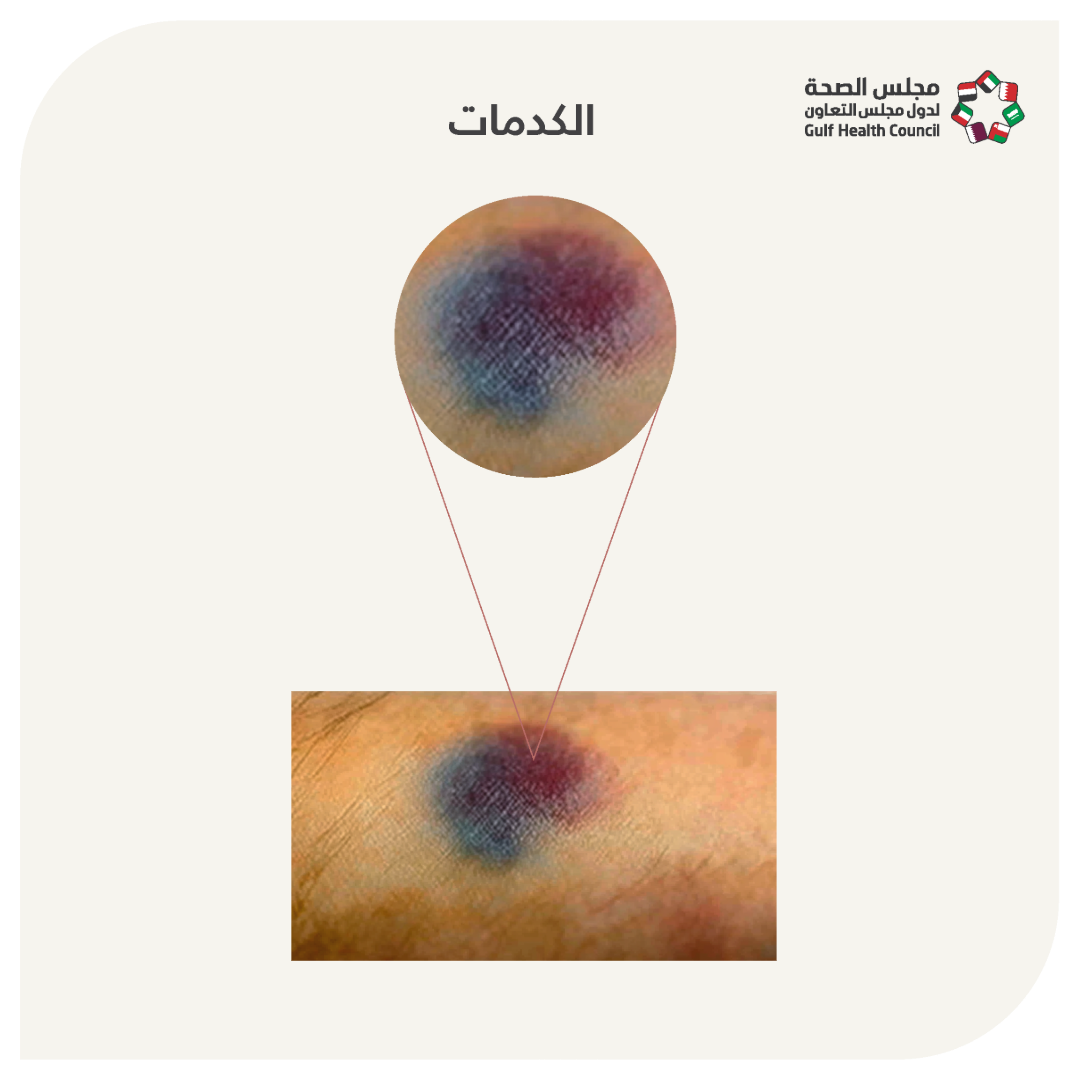
الكدمات هي العلامات الملونة التي تظهر على الجلد نتيجة إصابته أو إصابة أحد الأنسجة الداخلية، حيث تتسبب الإصابة في تلف الأوعية الدموية الموجودة تحت الجلد، مما يؤدي إلى تسرب الدم ثم تغير لون الجلد إلى اللون الأزرق، أو الأسود، أو الأرجواني، أو الأصفر.
أنواع الكدمات:
- الورم الدموي (Hematoma): وهو تجمع دموي يحدث بعد الضربات القوية بسبب الحوادث، أو السقوط مما يؤدي إلى تكون بؤرة دموية.
- الفرفرية (Purpura) أو النمشات (Petechiae): نزيف خفيف تحت الجلد وتكون منتشرة على شكل نقاط دموية صغيرة.
- فرفرية الشيخوخة (Senile purpura):حيث انه مع تقدم العمر البشرة تصبح أرق شيئاً فشيئاً وجافه وأكثر عرضة للتمزق فيصبح عرضة للكدمات بشكل أكبر وتكون منتشرة على شكل نقاط دموية صغيرة.
ما هي أسباب تشكل الكدمات؟
كل شخص معرض للإصابة بالكدمات خاصة المسنين حيث يمكن التعرض لها عند السقوط أو الحوادث أو الإصابات الرياضية أو الإجراءات الطبية، ولكن هناك حالات هم أكثر عرضة للكدمات وهم:
- المصابون بالسرطان.
- المصابون بأمراض الكبد.
- المصابون بأمراض الدم.
- المصابون ببعض الأمراض المناعية.
- تناول أدوية مسيلة للدم.
- نقص فيتامين ج أو فيتامين ك.
كيف يتم التعامل مع تشكل الكدمات؟ نصائح قد تساعدك في التغلب على تشكل الكدمات.
تتلاشى معظم الكدمات خلال أسبوعين دون علاج وقد تستمر الكدمات الشديدة لمدة شهر وقد تساعد هذه الخطوات على التعافي بشكل أسرع:
- الراحة ورفع المنطقة المصابة لمنع التورم وتسكين الألم.
- وضع أكياس ثلج لمدة تتراوح بين 24 إلى 48 ساعة بعد الإصابة مباشرة.
- وضع كمادة دافئة على المنطقة المصابة بعد يومين.
- تناول مسكنات للألم.
متى يجب عليك مراجعة الطبيب؟
هناك حالات معينة تستلزم ذهاب المصاب إلى الطبيب وهي:
- الكدمات حول العينين.
- كدمات قد تستمر لأكثر من أسبوعين.
- كدمات كبيرة متكررة.
- الإحساس بكتلة في منطقة الكدمة (بؤرة دموية).
- ألم يستمر بعد أيام من الإصابة.
- كدمات متكررة في نفس المكان.
- ظهور كدمات في الجسم بلا سبب.
- نزيف غير عادي، مثل الرعاف، أو دم في البول، أو دم مع البراز، أو الاستفراغ الدموي.
- وجود نزول في الوزن غير مبرر.
- وجود حرارة في الجسم مع الكدمات.
الأسئلة الشائعة:
هل الكدمات تدل على أمراض خطيرة كسرطان الدم؟
أسباب الكدمات عديدة والكثير منها أسباب حميدة، ولكن قد يكون من مسبباتها بعض السرطانات الخبيثة ولذا يجب مراجعة الطبيب في حال وجود الكدمات وخاصةً في وجود الأعراض التي تستدعي زيارة الطبيب.
هل وجود الكدمات دليل على نقص الفيتامينات؟
أحد الأسباب غير الشائعة لوجود الكدمات هو نقص فيتامين ج أو فيتامين ك، ونقص هذه الفيتامينات نادر الحدوث بسبب وجودها في معظم الأطعمة.
هل من الممكن الوقاية من الكدمات؟
كل شخص معرض للإصابة بالكدمات ولكن يمكن التقليل من الإصابة بالسقوط الذي يعتبر من أهم مسببات الكدمات إذا تم تطبيق التالي:
- إزالة الفوضى في المكان والتأكد من عدم وجود شيء يسبب التعثر والسقوط.
- إضاءة المكان جيداً.
- التأكد من عدم وجود سوائل في الأرضية.
- فحص النظر والسمع بانتظام خاصةً لكبار السن.
