

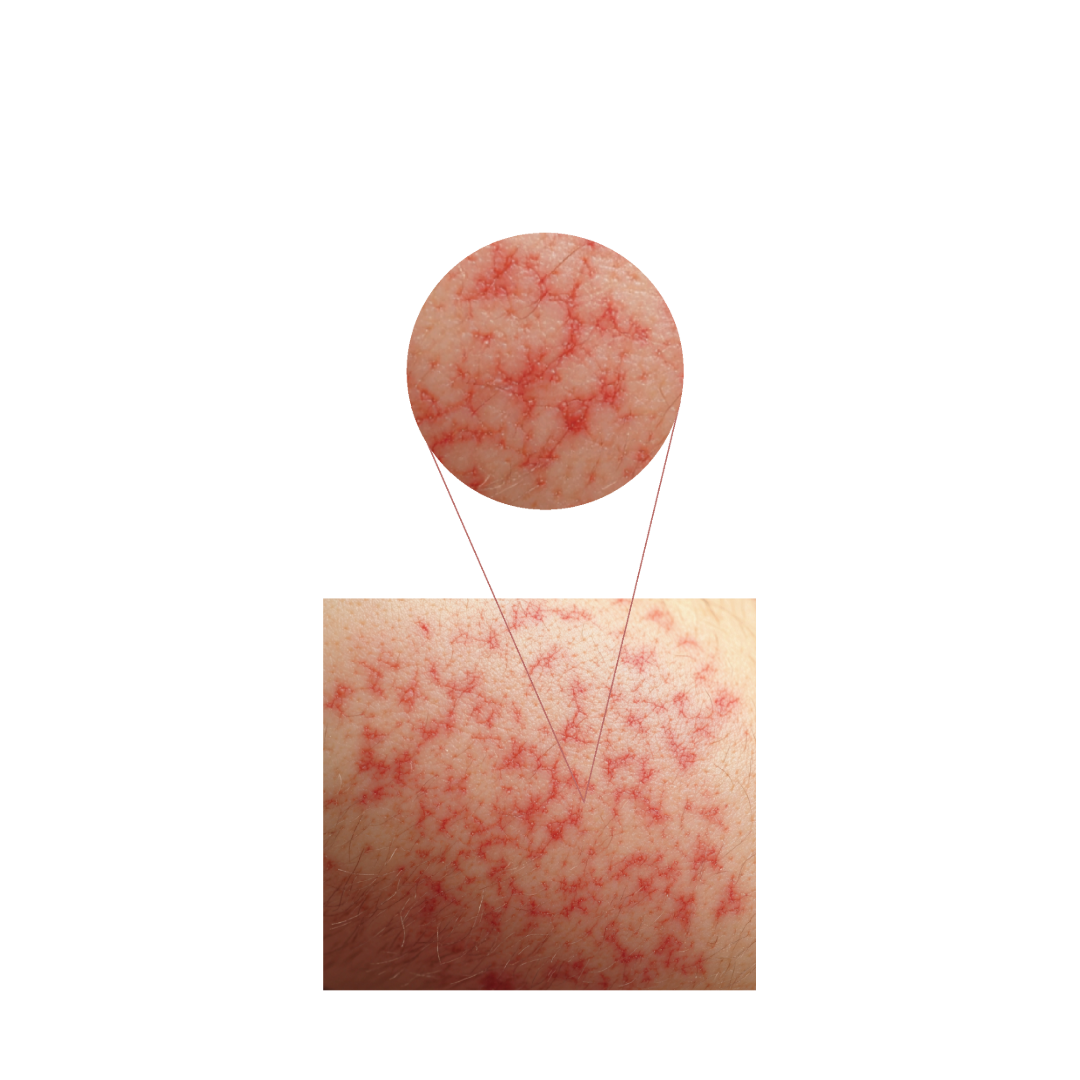
ستساعدك هذه الصفحة على إجابة تساؤلاتك
ما هو الطفح الجلدي؟
هي تغيرات في ملمس أو لون الجلد قد فيها يبدو ملتهباً أو متهيجاً على عدة أشكال، وفي بعض الأحيان يتشابه للمصاب أنواع الطفح الجلدي مع بعضه الآخر، وقد يكون الطفح الجلدي في منطقة واحدة بالجسم أو في جميع أنحاء الجسم وتتراوح شدة الطفح ومدى خطورته على حسب المسبب وعلى الرغم أن معظم الطفح الجلدي ليس خطيراً إلا أن بعض الطفح الجلدي قد يكون علامة لشيء خطير.
ما هي أسباب الطفح الجلدي؟
التهاب الجلد بسبب التعرض للمهيجات ولمسها مثل:
- حساسية الطعام.
- حساسية أو أعراض جانبية لبعض الأدوية.
- عضات ولسعات الحيوانات.
- لمس بعض المواد الكيميائية مثل اللاتكس أو المطاط.
- بعض مواد التجميل والصابون أو مواد التنظيف.
- الأصباغ.
- بعض أنواع النباتات.
الحالات والأمراض الصحية مثل :
- التهاب الجلد التأتبي (الأكزيما).
- الصدفية.
- عدوى القوباء عند الاطفال (impetigo).
- الهربس.
- الجدري.
- الحصبة.
- الحمى القرمزية.
- الوردية.
- الذئبة الحمراء.
- التهاب المفاصل الروماتويدي.
كيف تتعامل مع الطفح الجلدي؟ نصائح تساعدك في التغلب على الطفح الجلدي.
- تجنب حك المنطقة المصابة.
- تجنب استخدام كريمات تجميلية أو لوشن بشكل مباشر على الطفح الجلدي.
- إذا كنت تتناول أدوية معينة لا توقفها إلا بعد استشارة الطبيب إلا في حالة وجود ضيق تنفس وانتفاخ بالوجه والرقبة أو انتشار الطفح بشكل كبير يجب إيقافها ومراجعة الطبيب مباشرة.
- استخدم ماء دافئ وليس حار عند الغسل ومن ثم جففه بلطف.
- إذا كنت تستخدم منتج معين مؤخراً توقف عن استخدامه.
- اجعل المنطقة معرضة للهواء قدر المستطاع.
- ارتدي ملابس قطنية ناعمة.
متى يجب عليك مراجعة الطبيب؟
إذا كان لديك طفح جلدي ولاحظت أياً من الأعراض التالية:
- إذا كان هناك طفح جلدي في كامل الجسم.
- إذا ظهر الطفح الجلدي بشكل مفاجئ وينتشر بسرعة.
- إذا كان الطفح مصاحب لارتفاع في درجة الحرارة.
- إذا كان الطفح مصاحب لصعوبة في التنفس.
- إذا كان الطفح يصاحبه انتفاخ في الوجه.
- إذا كان الطفح الجلدي مصاحب لألم.
- إذا كان هناك تقرحات مفتوحة أو بثور متقيحة.
- إذا كان الطفح الجلدي على شكل كدمات.
- إذا كان هناك حكة شديدة مصاحبة للطفح.
- إذا كانت هنالك علامات عدوى في الطفح الجلدي وهي (انتفاخ، خروج قيح أو سوائل خضراء أو صفراء، ألم، حرارة في منطقة الطفح، قشور)
الأسئلة الشائعة:
هل وجود الطفح الجلدي يعني أنني مصاب بمرض خطير؟
- معظم مسببات الطفح الجلدي بشكل عام غير خطيرة، ولكن في حال وجود أعراض مصاحبة للطفح الجلدي كالحرارة والتقيحات والكدمات والحكة الشديدة يجب مراجعة الطبيب لعمل الفحوصات اللازمة ووضع الخطة العلاجية لمعرفة أسباب الطفح الجلدي.
هل لابد من عمل فحوصات لمعرفة أسباب الطفح الجلدي؟
- لا، كثير من أنواع الطفح الجلدي مسبباتها يمكن معرفتها من خلال التاريخ المرضي والفحص السريري من دون الحاجة لعمل فحوصات غير ضرورية.
هل هنالك عوامل من الممكن أن تؤثر في الطفح الجلدي؟
نعم هنالك عوامل من الممكن أن تؤثر أو تحفز الطفح الجلدي مثل:
- العمر.
- الإجهاد.
- التعب.
- أحوال الطقس القارسة.
- البشرة الدهنية.
- المستحضرات القائمة على الكحول.
