

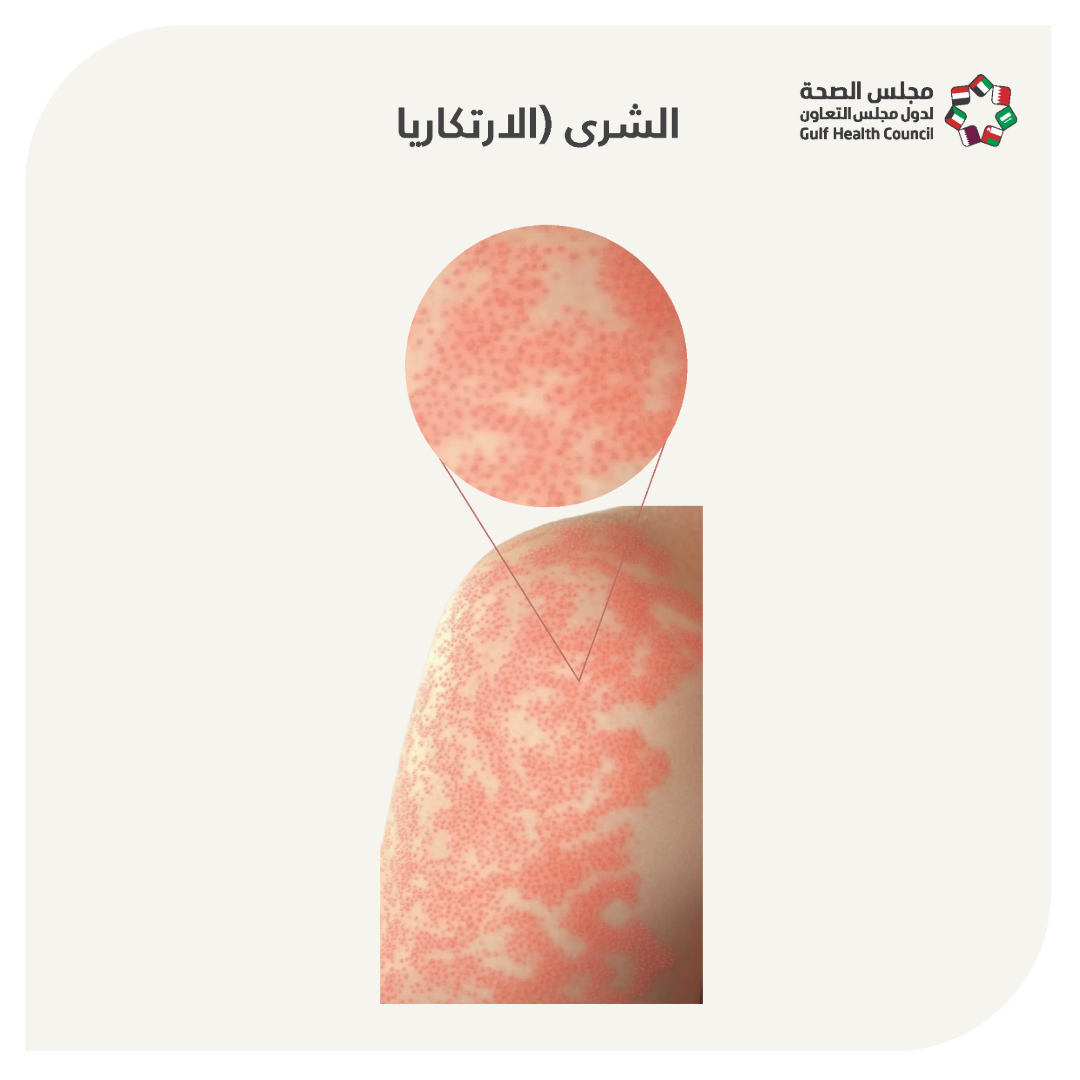
(Diseases)
This page will help answer your questions.
What is Urticaria?
Urticaria is a skin condition characterized by small red bumps or large red patches (rash) accompanied by itching. It is usually due to an allergic reaction to certain foods or substances the body is exposed to. Most cases of urticaria resolve quickly, but in some cases, it can become chronic or remain on the skin for a long time.
What are the symptoms of Urticaria?
Symptoms may include:
A rash consisting of bruise-like patches of various sizes that can appear anywhere on the body.
Severe itching.
Painful swelling, Specifically around the eyes or mouth.
What causes Urticaria?
Urticaria occurs as an allergic immune reaction to certain triggers, such as:
Certain foods (e.g., eggs, fish, nuts, dairy products).
Some medications, including certain antibiotics.
Insect bites.
Thermal changes such as fluctuations in temperature or exposure to sunlight.
Substances in products, such as latex in medical gloves.
Blood transfusions.
Bacterial infections, such as urinary tract infections or the common cold.
animal hair/fur (pet dander).
Some plants.
Triggers may vary from person to person. In chronic urticaria, the cause may not always be clear.
How is it diagnosed?
A physician will take a medical history and perform a physical examination. Additional tests may be requested if needed.
How is Urticaria treated?
Treatment may include several measures, as needed:
Antihistamines.
Medications containing corticosteroids.
How can Urticaria be prevented?
Urticaria cannot be completely prevented permanently, but avoiding triggers can help, such as:
Avoid foods that cause allergic reactions.
Take a shower and change clothes after exposure to a trigger.
Avoid soaps or detergents containing fragrances that cause sensitivity.
Wear loose clothing if a rash appears.
if you are exposed to stress or excessive effort.
What are the complications of Urticaria?
Urticaria usually does not cause severe complications, but in some people, the rash may indicate a severe allergic reaction, leading to difficulty breathing.
When should you see a doctor?
See a doctor if you notice:
Symptoms do not improve within two days.
The rash spreads.
Fever develops.
Swelling of the skin.
feeling tightness in the chest or throat.
Difficulty breathing.
Swelling of the face, lips, or tongue.
Frequently Asked Questions:
How long does it take for urticaria to heal? Most cases of urticaria heal within a few days or weeks. Chronic urticaria may take longer to resolve.