

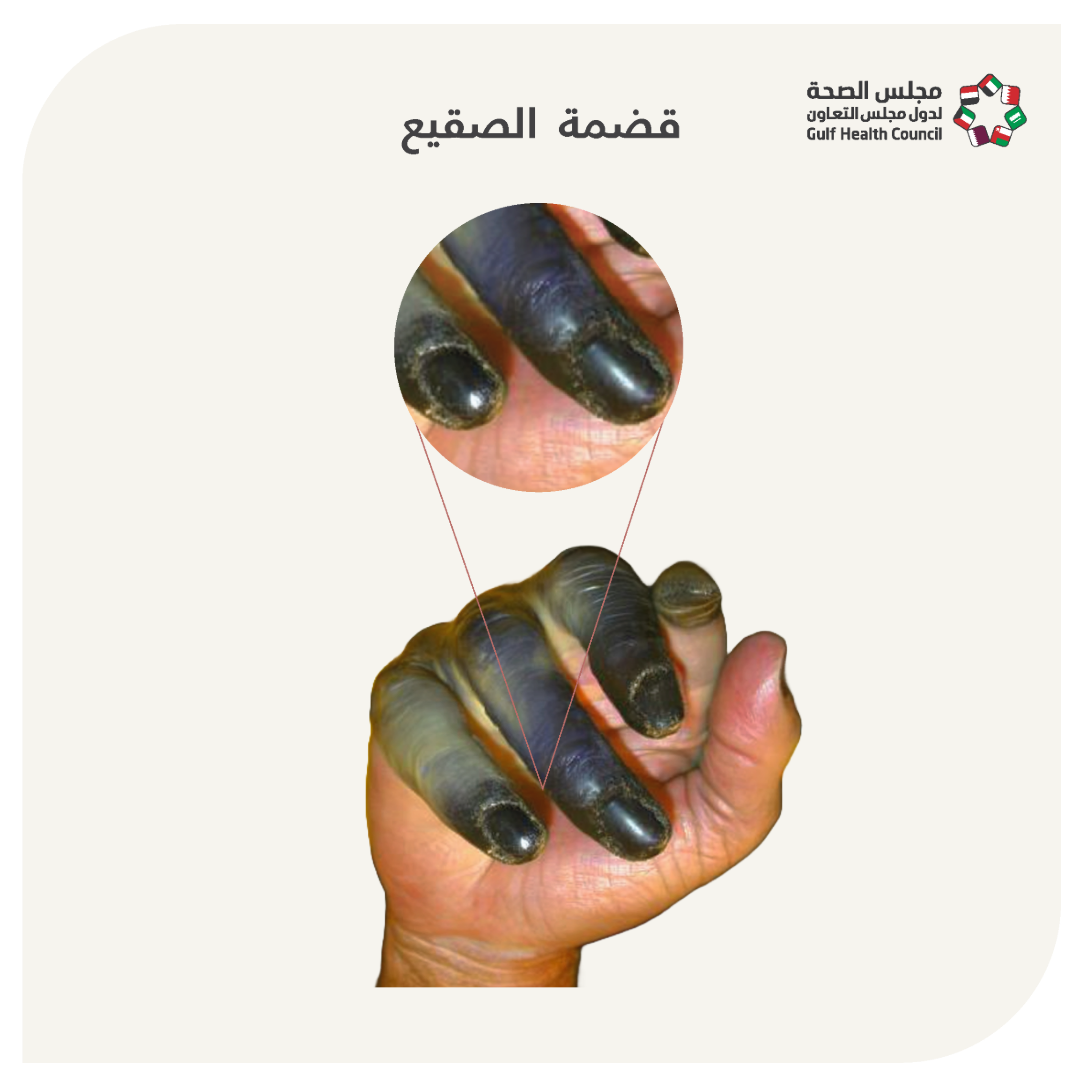
Frostbite
This page will help you prepare and respond appropriately in cases of frostbite first aid.
When Does Frostbite Occur?
Frostbite occurs when the body is exposed to extremely low temperatures (below -0.55 degrees Celsius), This can result in damage to the skin and underlying tissues. Frostbite commonly affects the extremities of the body, such as( the hands, feet, ears, nose, and lips).
- Some people are more susceptible to frostbite than others, including:
- Those living in harsh snowy environments.
- Individuals who engage in sports in cold and high-altitude areas, such as skiing and mountain climbing.
- Those who suffer from vascular and circulatory issues, like Raynaud’s phenomenon.
Children or the elderly, as their bodiesare less capable of regulating temperature.
What Are the Symptoms of Frostbite?
Frostbite symptoms develop in three stages, depending on the degree of cold and the duration of exposure.
Initially, the patient experiences symptoms of hypothermia, with a body temperature dropping below 35 degrees Celsius.
Stage One:
- Those affected may feel:
- Tingling and pain in the affected area.
The skin becomes cold, numb, and white.
Intermediate Stage (Superficial Frostbite):
- With continued exposure to cold, individuals may experience:
- Freezing and stiffness of the affected area.
Redness and blistering of the affected area, which may cause pain and discomfort.
Usually, the intermediate stage affects the superficial layers of the skin. The underlying skin layers are often unharmed, but treatment is necessary to ensure no permanent damage occurs.
- Advanced Stage:
- The affected skin changes to dark patches or appears blue or black.
- The skin becomes extremely cold.
The tissues and inner skin layers become stiff.
- How to Deal with Frostbite?
- Move to a warm place as quickly as possible.
- Avoid walking on frostbitten feet whenever possible and refrain from putting pressure on the affected area.
- Gently remove rings, shoes, jewelry, or any clothing items from the affected area.
- Replace wet clothes with dry, soft ones.
- Use blankets to gradually warm the body and protect frostbitten areas.
- Avoid rubbing the affected area or applying direct heat, such as fire, as this may cause further injuries.
- Avoid smoking, as it can affect circulation.
- Do not peel blistersCin the affected area.
- Warm areas affected by frostbite by soaking them in warm water at a temperature between 37-40C until the skin becomes reddish and warm.
- Apply a wide, light, and sterile dressing around the area.
- Avoid exposure to cold while warming affected areas.
Contact emergency services.
Emergency Numbers in Gulf Countries:
Oman: 9999
Saudi Arabia: 997
Kuwait: 112
Qatar: 999
UAE: 998
Bahrain: 999
