

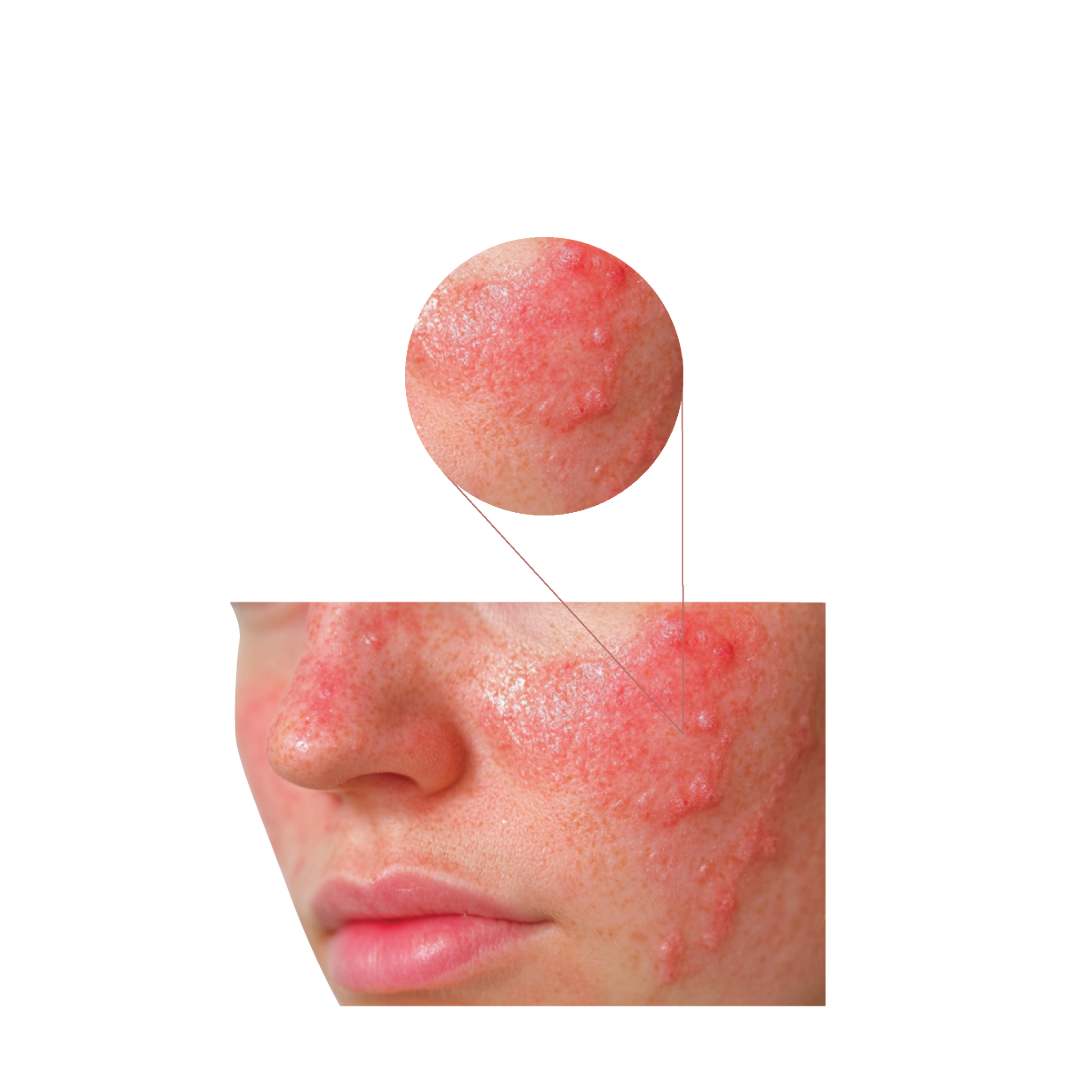
Rosacea
On this page, you will find everything you need to know regarding rosacea.
WhatisRosacea?
Rosacea is a long-term inflammatory skin condition that causes skin redness and rashes, usually on the nose and cheeks. It may also cause eye problems. The symptoms typically appear and disappear on their own, with many people noting that certain factors like sun exposure or emotional stress can trigger rosacea.
What are the symptoms of rosacea?
- Symptoms of rosacea include:
- Facial redness: It starts with the skin turning red and may last for a long time,accompanied by a tingling or burning sensation. The reddened skin may become rough and scaly.
- Rash: Areas of facial redness can develop into red, pus-filled bumps and pimples resembling acne.
- Visible blood vessels: These usually appear as thin, red lines on the cheeks and nose.
- Thickened skin: The skin may thicken, especially on the nose, giving it a swollen, and enlarged appearance. This is one of the most severe symptoms and mostly affects men.
Eye irritation: Called ocular rosacea, where the eyes become sore, red, itchy, watery, or dry. The patient may feel like they have something in their eye, and the eyelids may swell and become red at the base of the lashes.
The condition typically affects the face, but in rare cases, it can extend to other parts of the body, such as the sides of the face, ears, neck, scalp, and chest.
What causes rosacea?
The cause of rosacea is not known, but inflammation may contribute to some of the main symptoms like skin redness and rash, although the cause of inflammation is unknown.
- This may be partially due to:
- Increased skin sensitivity inUVpeople with rosacea.
- Environmental stressors, such as ultraviolet (UV) rays and skin-dwelling microbes.
Genetic and non-genetic (environmental) factors play a role in developing rosacea.
What are the diagnostic methods?:
- The doctor takes a medical history and performs a clinical examination, and may order additional procedures if needed, such as:
- Doctors rely on the appearance of the skin and eyes for diagnosis.
Some tests to exclude other conditions that resemble rosacea.
What are the treatment methods for rosacea?
Treatment involves several procedures, as needed, and may include:
Medications: At times, doctors prescribe oral and topical medications to treat the bumps, pimples, and redness associated with the disorder.
Surgical procedures: Doctors can use lasers to remove visible blood vessels, reduce the intensity of facial redness, or correct nasal deformity in some cases.
What are the prevention methods for rosacea?
There are some ways through which one can manage rosacea, in addition to regular doctor visits.
- The following tips can help makeliving with this condition easier:
- Identify the triggers that provoke your rosacea, as they vary among individuals, but some common factors include:
- Sun exposure.
- Psychological stress.
- Hot or cold weather.
- Strong winds.
- Strenuous exercise.
- Alcohol consumption.
- Hot baths.
- Spicy food.
Hot foods or beverages.
- It’s also recommendedto follow sometips, such as:
- Gentle skincare: Use facial cleansers designed for sensitive skin, moisturize regularly, and avoid exfoliating and alcohol-containing products.
- Protect your skin from the sun.
Pay attention to your eyes: Watch for any redness or burning sensations.
What are the complications of rosacea?
- Rosacea can cause some complications, such as:
- If left untreated, the eyes might get damaged, leading to vision loss.
- In some cases, rosacea progresses from temporary redness of the nose and cheeks to long-term redness, then skin rashes and small blood vessels under the skin. If untreated, the skin may thicken and swell, resulting in firm, red bumps, especially on the nose.
In rare cases, rosacea can spread to other parts of the body, like the sides of the face, ears, neck, scalp, and chest.
When should you see a doctor?
- Consult your doctor if your rosacea:
- Causes eye irritation.
- Spreads from the face to other parts of the body.
If rashes or blood vessels appear under the skin.
Frequently Asked Questions
Is rosacea a chronic disease?
