

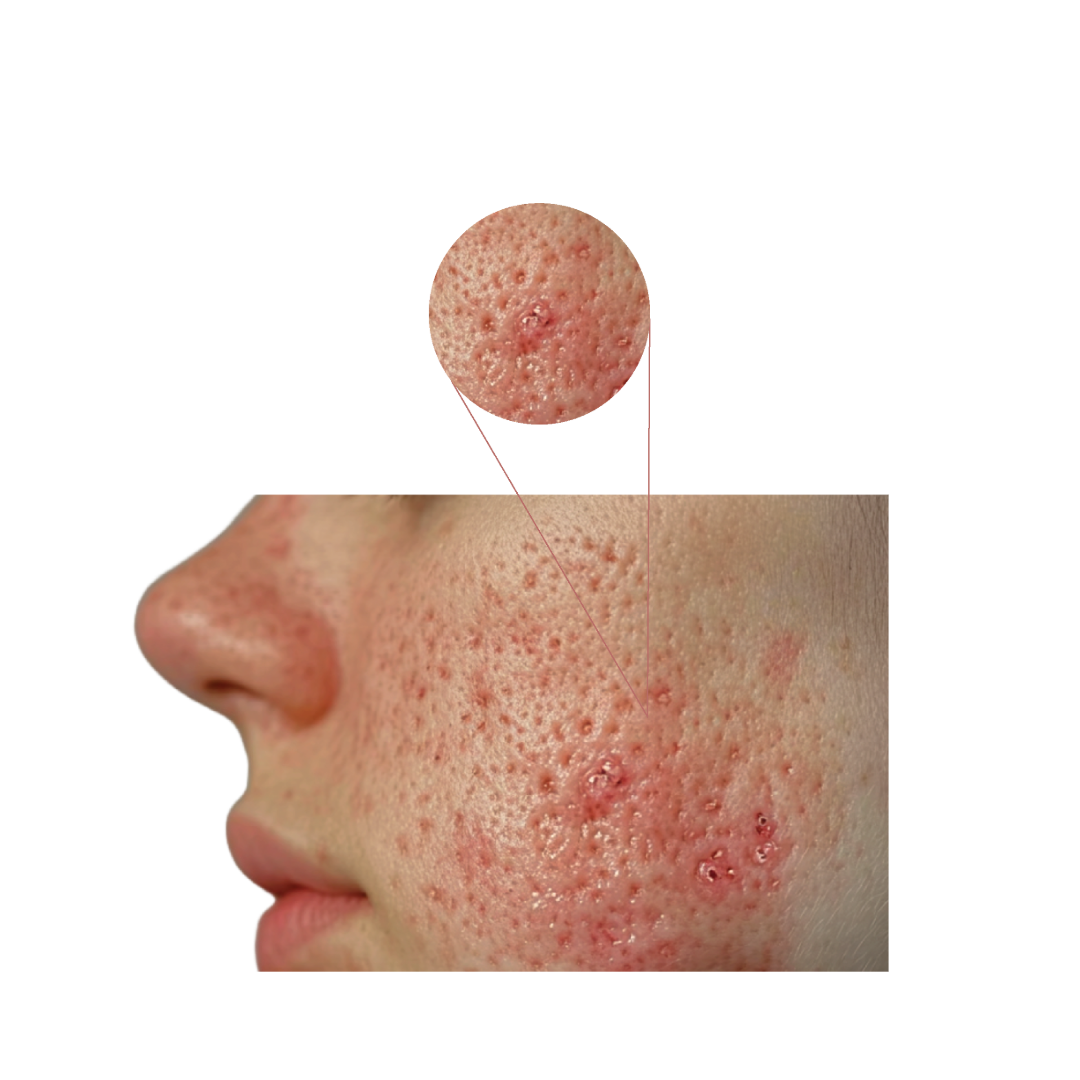
Acne
On this page, you will find everything you need to know about acne.
What Is Acne?
- Acne is a common skin condition that occurs when pores and hair follicles beneath the skin become clogged with oils secreted by the sebaceous glands and dead skin cells. Acne is also referred to as pimples or spots, and it can appear anywhere on the body, but most often on the face, back, arms, and chest. The types of acne include:Whiteheads):
Whiteheads:
- Whiteheads form when excess oil and dead skin cells accumulate under the skin, leading to clogged pores. This results in a raised bump on the skin’s surface, either skin– colored or with a white head.Black Heads):
Blackheads:
- Blackheads form when excess oil and dead skin cells accumulate under the skin, causing clogged pores and expansion, with a noticeable black head inside the pore.Pimples or Pustules):
Pimples or Pustules:
- These generally occur when excess oils, dead skin cells, and bacteria accumulate inside the pores. The accumulated oils may allow beneficial skin bacteria to multiply, potentially causing swelling and prominence. Pimples might contain pus.acne cysts)
Acne Cysts:
These occur when excess oils, dead skin cells, and bacteria accumulate inside the pores, potentially causing deep inflammation and swelling within the skin. Cystic bumps might be painful and contain pus.
- What Are the Symptoms of Acne?
- Pimples: Pus-filled bumps.
- Blackheads: Clogged pores with a black surface.
- Whiteheads: Clogged pores with a white surface.
Cysts: Painful lumps filled with fluid pus under your skin.
- What Causes Acne?
- Excessive oil secretion (oily skin).
- Oil buildup inside the pores.
- Accumulation of dead skin cells inside the pores.
Bacterial growth inside the pores.
- Factors that might increase the chance of developing acne include:
- Age, especially during teenage years and young adulthood.
- Puberty.
- Hormonal changes during pregnancy, the menstrual cycle, or after stopping contraceptives.
- Family history of acne.
- Having oily skin.
Certain medications.
- Factors that do not cause acne but may worsen it:
- Stress.
- High humidity and pollution.
- Picking and squeezing acne.
- Harsh scrubbing with exfoliants.
Cosmetics.
- How Is Acne Diagnosed?
- Clinical examination and examination of affected skin.
Medical history.
What Are the Treatments for Acne?
- Treatment involves various procedures as appropriate, which may include:
- Medicinal cleansers.
- Topical creams containing Vitamin A derivatives, such as Acretin and Differin.
- Roaccutane treatment depends on the patient’s health condition and should only be started after conducting the necessary medical tests and consulting the treating physician.
- Topical antibiotics like benzoyl peroxide.
- Oral antibiotics.
- Cortisone injections.
Laser or light therapy.
Most people notice improvement by their thirties, although acne may persist longer in some.
How Can Acne Be Prevented?
- You cannot entirely prevent acne, especially during hormonal changes. However, you can reduce the risk of developing acne by:
- Washing your face daily with warm water.
- Using oil-free moisturizer.
- Removing makeup at the end of each day.
Keeping your hands away from your face.
- Acne Management Tips:
- Identify your skin type to select cleansers suitable for it (consult a dermatologist if needed).
- Use topical creams and medications only as prescribed.
- Be gentle with your skin and avoid harsh scrubbing.
- Refrain from touching affected areas or squeezing pimples.
- Apply sunscreen before sun exposure, and try to avoid direct sunlight.
- Avoid tight clothing that may irritate the skin where acne exists.
- Use oil-free cosmetics and sunscreens to avoid pore-clogging.
Follow a healthy diet.
- What Are the Complications of Acne?
- Acne scars and skin marks.
Acne may affect self-confidence, especially in teenagers.
- When Should You See a Doctor?
- When acne appears, and you are seeking solutions.
- If treatment options are ineffective.
If pimples are painful, pus-filled, or accompanied by a fever.
Frequently Asked Questions
Is acne contagious?
No, acne is not contagious.
Are blackheads dirt?
